

First Beat the dark
Why AIS won't save you if your crew can't see

There’s a moment in every offshore race when the fleet disappears.
Not on AIS. Not on the tracker. But in reality.
It’s the moment darkness properly settles in and suddenly, half the boats are no longer sailing the same race.
Some are still racing hard. Others might be sailing almost blind because of a few basics they have missed, and they are quietly giving miles away.
This is a challenge that never goes away. It’s about biology, discipline, and understanding how the body and in this case the eyes actually works at sea.
I know this because I once came up from below in the middle of the night and saw something the entire deck watch had missed.
The Night Off Portland Bill
RORC Myth of Malham, 2014. J109, running back from Eddystone in the small hours, past Portland Bill with the A2 flying. Breeze building and gusting to 25, right at the edge of the kite in a building sea state. The TWA corridor was narrow: too low and the sail collapses, too high and you’re broaching in the dark.
The deck watch had a torch trained on the luff of the spinnaker.
To all intents and purposes, they were blind.
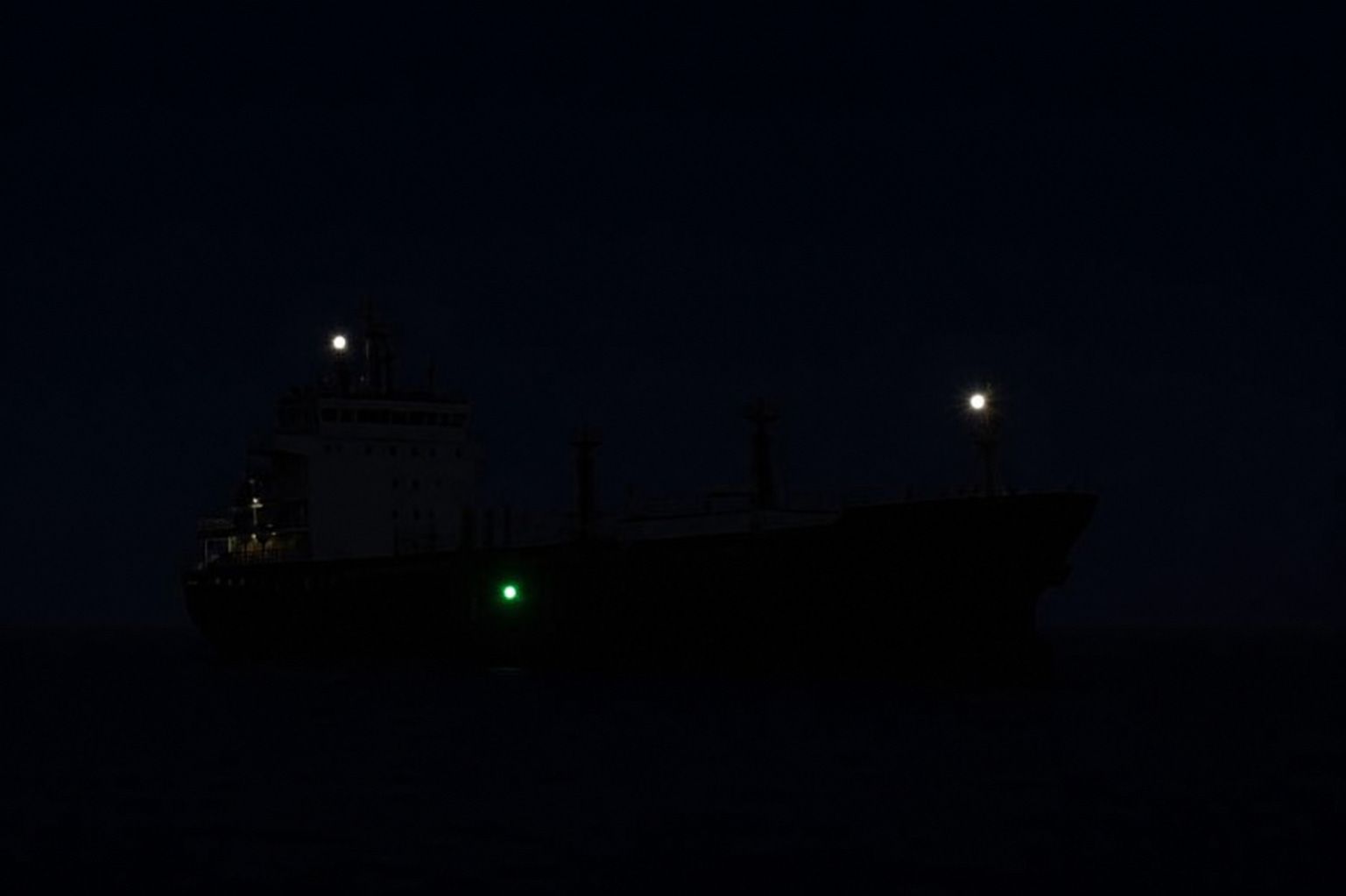
I was asleep below. I always sleep fully clothed on passage when I’m navigating, standby is standby. I was woken by the broach, came straight up the companionway, and as I cleared the hatch I saw it. Port beam. Two white masthead lights and a green sidelight.
A large power-driven vessel. Overtaking us. Under COLREGS Rule 18, she was the give-way vessel, we were under sail, we had right of way. She didn’t appear to know we existed.
I don’t know how long she’d been there. Neither did anyone on deck.
I killed the torch immediately and went below to raise her on Channel 16. No reply. I came back up with a white handheld flare (always keep one in the charttable) , planted myself in the hatch, and watched her bearing against it. Tracking. Constant. She was still closing.
I pulled the tape on the flare and held it aloft. White phosphorus dripping onto the deck in an explosion of light.
Slowly, slowly, the bearing crept aft. The CPA, when it came, was around 1.5 miles. Not catastrophic. But I hadn’t known that in the dark, with no response on the radio, and a crew who couldn’t tell me whether she’d been there for two minutes or twenty. When you can’t assess a situation, the situation controls you.
The watch had been sailing the boat with complete focus and zero situational awareness beyond ten feet of spinnaker luff. Their night vision had been destroyed by the torch they thought was keeping them safe. They hadn’t seen a give-way vessel failing to give way, because they genuinely could not see into the dark.
That is what this article is about, this was before AIS and maybe today its slightly easier but plotters on deck also are a hazard at night in in night mode! However the information in this article everyone should be aware of.
This Is Not a Theoretical Problem
The night vision failures that cost races also cost lives.
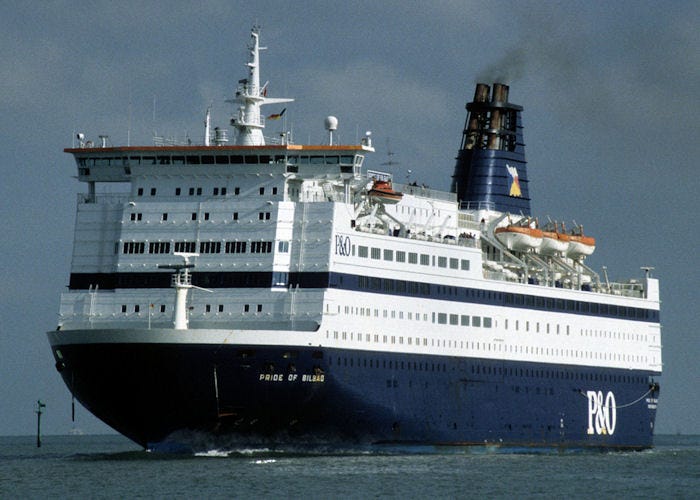
In August 2006, the 25ft sailing yacht Ouzo disappeared overnight south of the Isle of Wight with three crew. The MAIB investigation concluded she was most likely struck by the P&O ferry Pride of Bilbao. The official report documented that the ferry’s lookout had been wearing photochromic glasses that had darkened to transmit only 20% of available light — effectively destroying his ability to see in the dark. The yacht never appeared on the ferry’s radar screens, and the ferry’s lookout did not see Ouzo until she was very close ahead. Three people died.
This is the operational reality: a large vessel’s bridge team cannot always see a small yacht at night even when they’re looking. Leisure sailors should never assume they have been seen by other vessels, nor assume that other vessels will take avoiding action.
A VLCC — a Very Large Crude Carrier, up to 340 metres in length and 300,000 tonnes deadweight — travels at 15 knots and generates a huge bow wave. If one ran down a 38-foot racing yacht at night, neither Solong nor Stena Immaculate had a dedicated lookout on the bridge is the kind of finding that appears routinely in MAIB collision reports involving large commercial vessels. The yacht might register as a blip. It might not register at all. The ship would not slow down.
Your visibility to them depends entirely on how visible you make yourself. Your ability to see them first depends entirely on how well you’ve managed your night vision.
“Prevention is, as in other aspects of seamanship, better than cure.” Sir Robin Knox-Johnston
The Uncomfortable Truth About Night Vision
Most crews think they’re “used to the dark” after five minutes on deck.
They’re not.
What’s actually happened is partial adaptation — just enough to function, nowhere near enough to perform. There’s a significant difference between those two states, and mistakes are made during the gap between them.
Full dark adaptation takes 30 to 45 minutes to develop properly. It can be substantially set back in seconds.
One flash of white light. One bright screen. One careless head torch. Depending on intensity and duration, you may need another 10 to 20 minutes to recover meaningful night vision. Do it repeatedly across a watch and you never fully adapt at all. Most crews operate in a permanent half-adapted state, and most of them don’t know it.
What Is Actually Happening in Your Eyes
Your visual system doesn’t simply “adjust” to darkness. It switches mode entirely — and the switch takes time because it’s a chemical process, not a mechanical one.
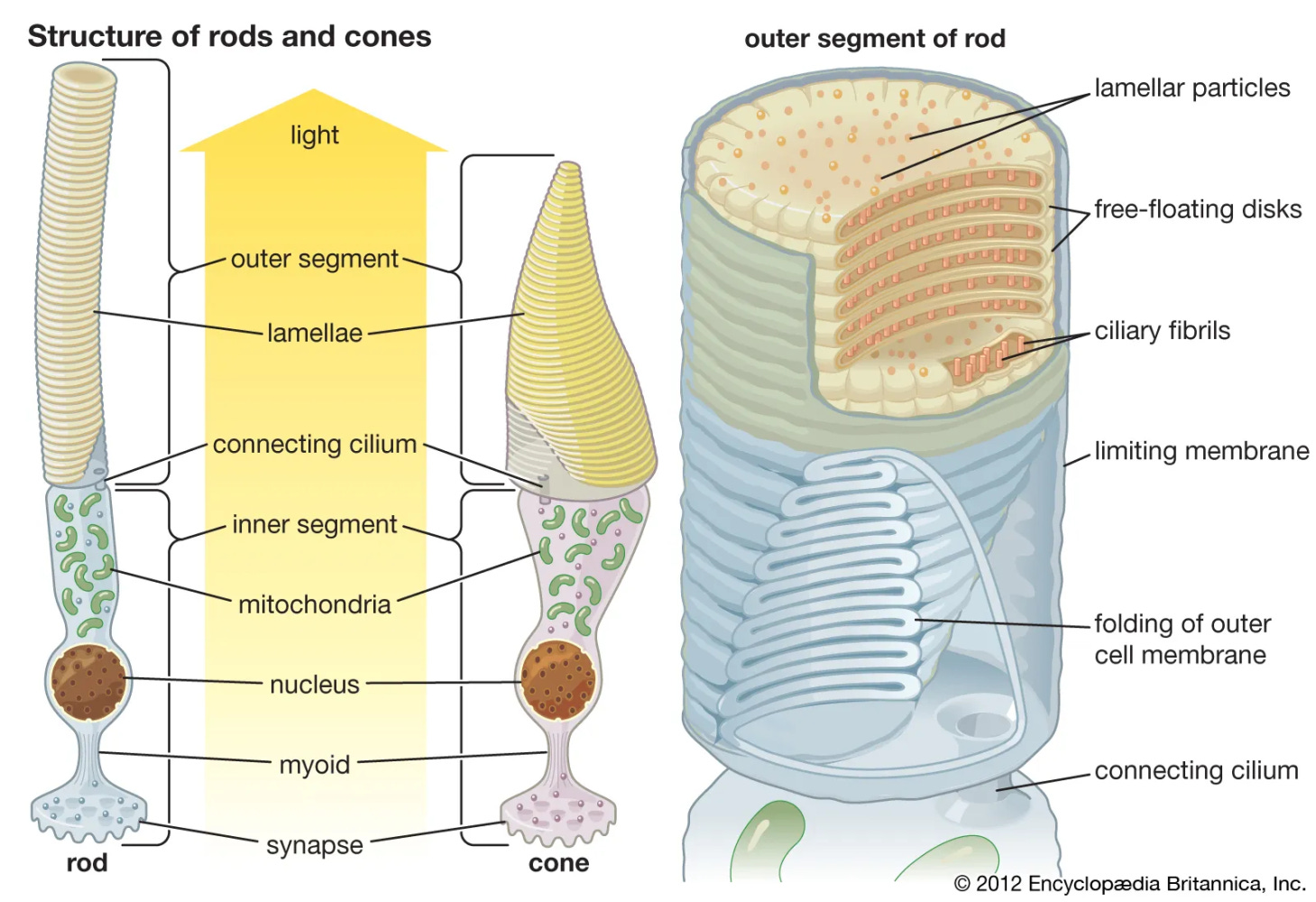
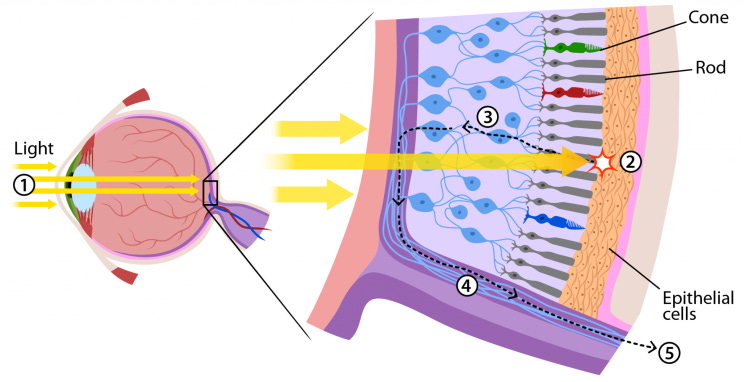
In daylight you rely on cone cells: sharp, detailed, colour vision, concentrated in the fovea at the centre of your visual field. Cones need strong light to function. At night they are largely useless.
In darkness your vision depends on rod cells: extremely light-sensitive, distributed across the peripheral retina, capable of detecting movement and contrast far below the threshold cones require. Rods have no colour discrimination — everything is shades of grey — but in genuine darkness they are extraordinarily capable. When properly adapted, the human eye can detect a candle flame at ten miles.
The critical molecule is rhodopsin — a photosensitive pigment packed into rod cells. Light bleaches rhodopsin, temporarily disabling the rods that contain it. Darkness allows it to regenerate. The recovery follows a curve: partial within the first ten minutes, functional around twenty, full sensitivity at thirty to forty-five minutes. This is why stepping on deck after time below can feel like walking into a black hole. You’re not adjusting. You’re chemically rebuilding your ability to see.
One thing most sailing articles don’t mention: this process degrades with age. Rod cell density decreases measurably from the mid-forties onward and rhodopsin regeneration slows. If you’re an experienced offshore sailor who has quietly noticed your night vision isn’t what it was twenty years ago, you’re not imagining it. The experienced end of the offshore fleet — the people who’ve done the most Fastnets, the most Biscay crossings — are precisely the people whose scotopic vision is operating at reduced capacity. Worth knowing. Worth planning around.
Why Red Light Works — and Why Most Crews Get It Wrong
You’ve heard it: use red light to preserve night vision.
Correct. But incomplete.
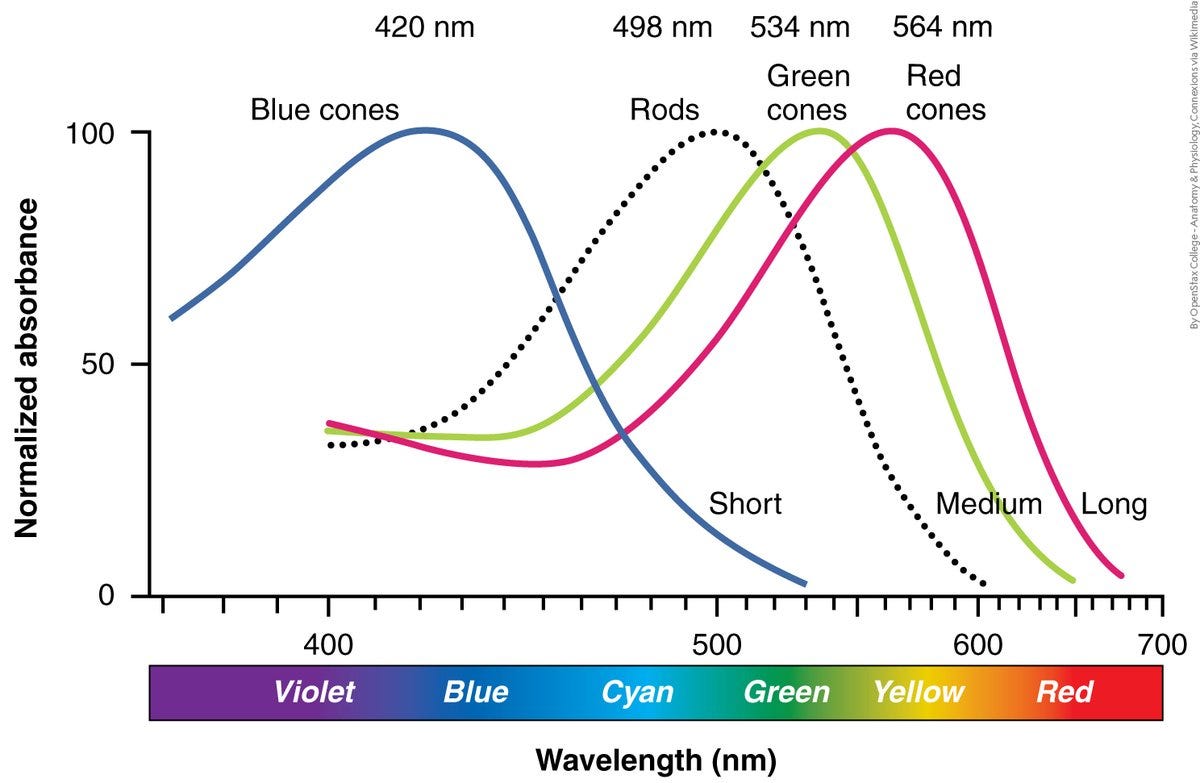
Rod cells have peak sensitivity in the blue-green range of the spectrum. Their sensitivity drops sharply above around 640 nanometres. Deep red light, above 650nm, causes substantially less rhodopsin bleaching than white light at equivalent brightness. Your scotopic adaptation remains largely intact.
The mistake and it’s near-universal is assuming red automatically means safe regardless of intensity.
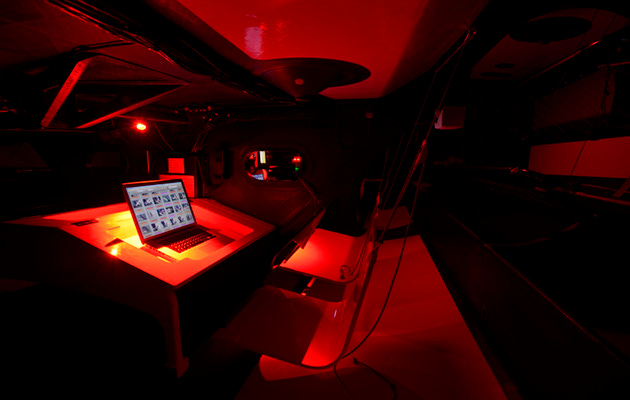
Dim red: good. Bright red: still a significant problem. Many LED torches in “red mode” are far too bright. Instrument screens in “night mode” are often nowhere near dim enough. The wavelength matters, but so does the intensity. You need both right.
The practical test: if your red light is illuminating the boat rather than simply making a specific label readable, it’s too bright.
The Timeline Nobody Respects
0–1 min — Effectively blind. You just don’t know it yet. 5 min — You think you can see. You’re operating at perhaps 30% of your potential. 10–20 min — Functional. Nowhere near peak. 30–45 min — Fully adapted. Rarely achieved on most race boats.
Most offshore crews spend an entire night watch cycling up and down through that middle band, repeatedly reset by light exposure they barely notice. They function. They don’t perform.
Where Crews Destroy Their Own Performance
You will recognise every one of these.
Chartplotters glowing at full brightness in the cockpit. Head torches firing during a sail change. Cabin lights blazing at watch handovers. Crew staring directly at the object they’re trying to detect, which is precisely the wrong technique, because the centre of your visual field has almost no rod cells. Staring directly at a dim object in the dark makes it effectively disappear.
On the night off Portland Bill, the watch had a torch on the spinnaker luff. Every crew member on deck was operating at something close to zero scotopic sensitivity. That torch was there for safety. It was the source of the problem.
Every one of these habits reduces sensitivity and delays reaction time. Collectively they compound across a night into something that shows on the results sheet and occasionally on an accident report.
What the Best Offshore Crews Do Differently
The distinction between good and poor night watch management is not equipment. It’s discipline, applied as a system.
They treat light like a resource, not a convenience. Red only. Lowest usable brightness. No exceptions for comfort or habit. The discipline applies to everyone on deck, not just the helmsman. A single crew member with a white torch undoes the entire watch.
They begin the night already ahead. Sunglasses worn late in the afternoon reduce light exposure during the final hours before dark, giving rhodopsin a head start on regeneration before the sun even sets. Most crews start managing their night vision at midnight. The best crews start as dusk begins.
They control their instruments. Minimum brightness. Red palettes. Essential data only, stripped back to what actually needs to be read on deck. You don’t need a bright screen. You need readable information that doesn’t cost you the ability to see the sea around it.
They use their eyes correctly. Two techniques, simple to learn, almost never taught on racing boats. Off-centre viewing looking slightly to one side of a target rather than directly at it uses the rod-rich peripheral retina and dramatically improves detection of dim objects. Scanning, a slow, deliberate sweep rather than a fixed stare, exploits the rod system’s strength in detecting movement and contrast. Standard techniques in aviation night flying and naval watchkeeping. They translate directly to offshore racing: spotting wind lines, approaching squalls, pressure changes, and sail shape shifts before anyone else in the fleet sees them.
“The art of the sailor is to leave nothing to chance.” Annie Van De Wiele — Belgian sailor, first woman to circumnavigate via Cape Horn
