

Understanding how hydrodynamics and aerodynamics work together in sailing
Physics underpin everything and never more important on a racing yacht

When I first started writing FirstBeat, one of the early pieces was a rapid masterclass on foils.
It came out of a conversation with an excellent dinghy sailor who was moving into keelboats. During a long, slow night offshore, we got onto the subject of what actually makes a yacht work, and I explained that one of the quiet miracles of sailing is a symmetrical foil underwater, working at an angle, creating lift.
Once you see that, a lot of sailing begins to make more sense.
The article is deliberately written in bullet-point form — fast, practical and easy to absorb. At the time, FirstBeat only had a few hundred subscribers, so I’m reposting it now for those who missed it first time round.
Foils Masterclass: Keel & Rudder Design in Modern IRC Race Boats
Or why leeway is misunderstood and if you read this you will helm better!
APR, 2026
By Stuart Greenfield — RYA Yachtmaster, RORC racer, FirstBeat Coach
Most crews talk endlessly about sails, routing, and tactics. Very few truly understand the only parts of the boat that convert all that effort into forward motion: the underwater foils.
Your keel and rudder are not just “appendages.” They are highly loaded, asymmetric lifting surfaces operating in a turbulent, moving fluid—often at Reynolds numbers that punish poor setup brutally.
If you misunderstand how they work, you will sail further, slower, and less efficiently—every single mile.
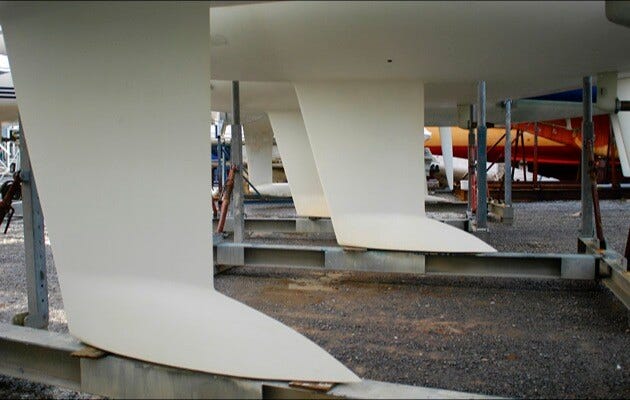
The Physics: Foils Are Wings (But Harder)
A keel generates lift exactly like an aircraft wing—but sideways.
The boat sails at a leeway angle (typically 3–6° upwind)
Water flow meets the keel at an angle of attack
This creates lift to windward, opposing sideways drift
The forward component of that force = your actual VMG
Key Insight:
Without leeway, there is no lift. Without lift, there is no upwind performance.
Poor sailors try to eliminate leeway. Good sailors control it precisely.
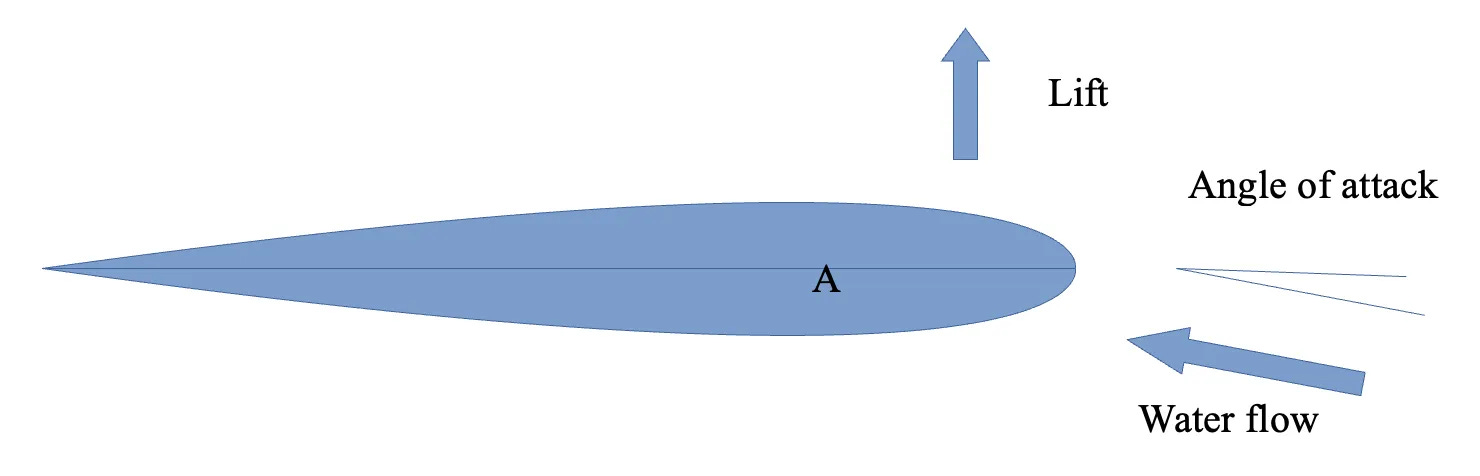
3. Leeway: The Most Misunderstood Performance Variable
Leeway is not inefficiency—it is the mechanism of efficiency.
Too little → stalled foil → no lift → slipping sideways
Too much → excessive drag → slow boat
Correct → maximum lift-to-drag ratio → fastest VMG
What top helmsmen understand:
They “load” the keel progressively
They feel when the foil is just below stall
They steer to maintain attached flow
What poor sailors do:
Oversteer → flow separation → drag spike
Pinch → stall → lose speed and height
Ignore feedback → blame sails or tide
4. Keel Design: The Primary Lifting Surface
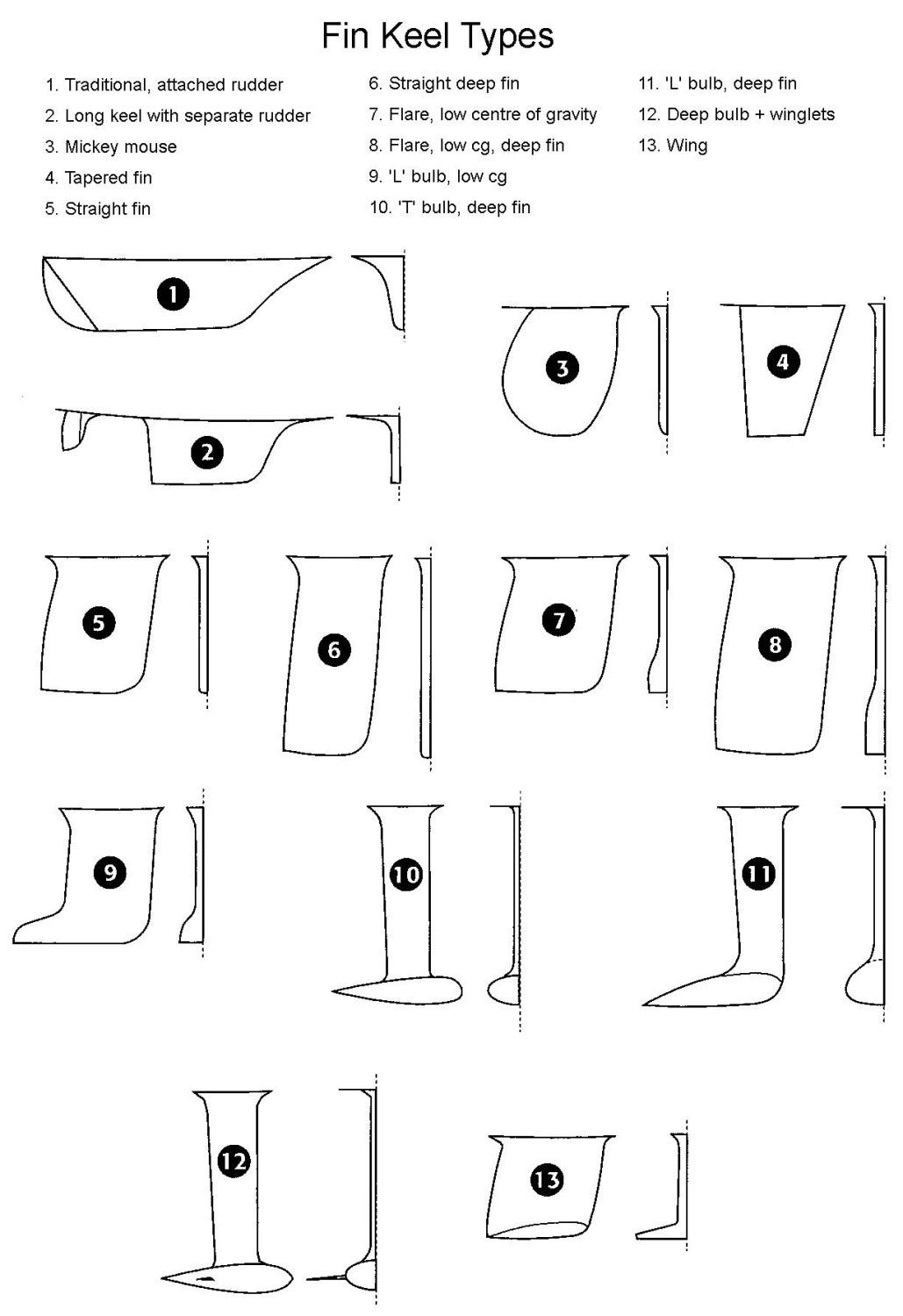
4.1 Aspect Ratio (Depth vs Chord)
High Aspect Ratio (deep, narrow keel):
Higher lift efficiency
Better upwind pointing
– Structurally demanding
– Draft limitations (IRC compromise)
Low Aspect Ratio (shallower, wider keel):
Lower draft
More forgiving
Higher induced drag
Less efficient lift
IRC reality: Designers are constantly trading rating vs efficiency
4.2 Chord Length
Chord = front-to-back length of the foil
Long chord → forgiving, stable, more drag
Short chord → efficient, but stalls more abruptly
Practical takeaway:
A short-chord keel demands precision helming and trim. A long-chord keel tolerates amateur input.
4.3 Bulb Design
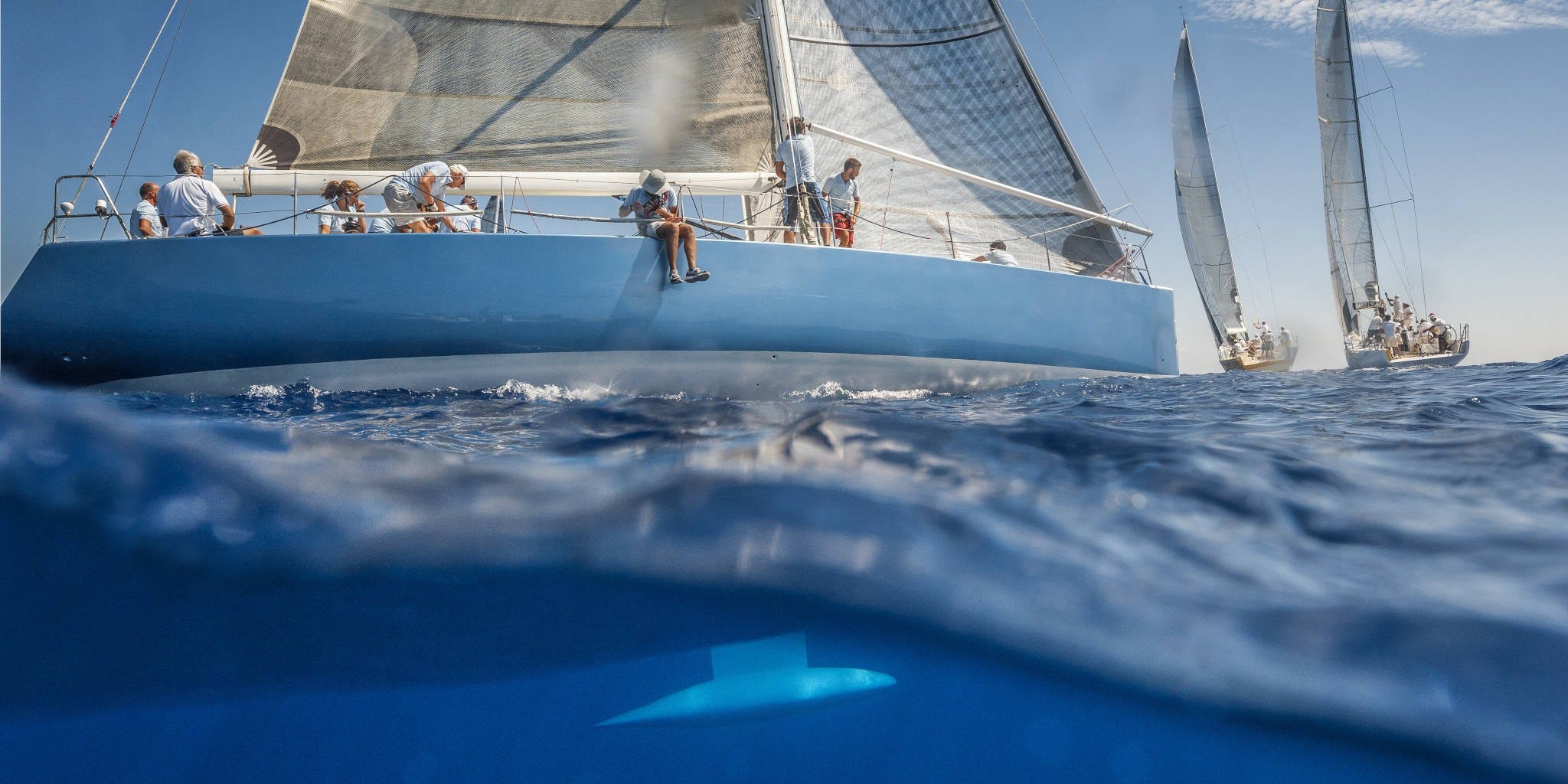
The bulb is not just ballast—it is a hydrodynamic body:
Reduces tip vortices
Lowers centre of gravity (COG)
Influences flow onto the keel fin
Poor bulb shaping = massive drag penalty
4.4 Foil Section (NACA Profiles)
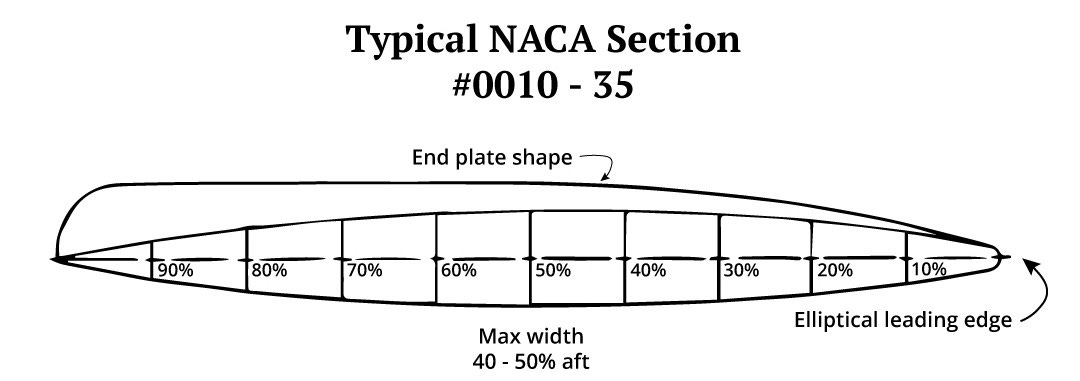
Most modern keels use modified NACA airfoil sections
Key characteristics:
Thickness distribution → structural + hydrodynamic balance
Camber → lift characteristics
Leading edge radius → stall behaviour
Critical point:
A keel is rarely symmetric in practice—loading and heel create effective asymmetry
5. Rudder Design: Control Surface or Second Wing?
5.1 Single Rudder
Advantages:
Lower drag in flat sailing
Simpler flow field
Better in light air
Disadvantages:
Loses effectiveness at high heel
Prone to ventilation
Requires active trimming to stay immersed
5.2 Twin Rudders (Modern Offshore Standard)
Advantages:
One rudder always vertical → optimal lift
Control at high heel angles
Reduced ventilation
Disadvantages:
Increased wetted surface drag
Slightly less efficient in light air
More complex alignment/setup
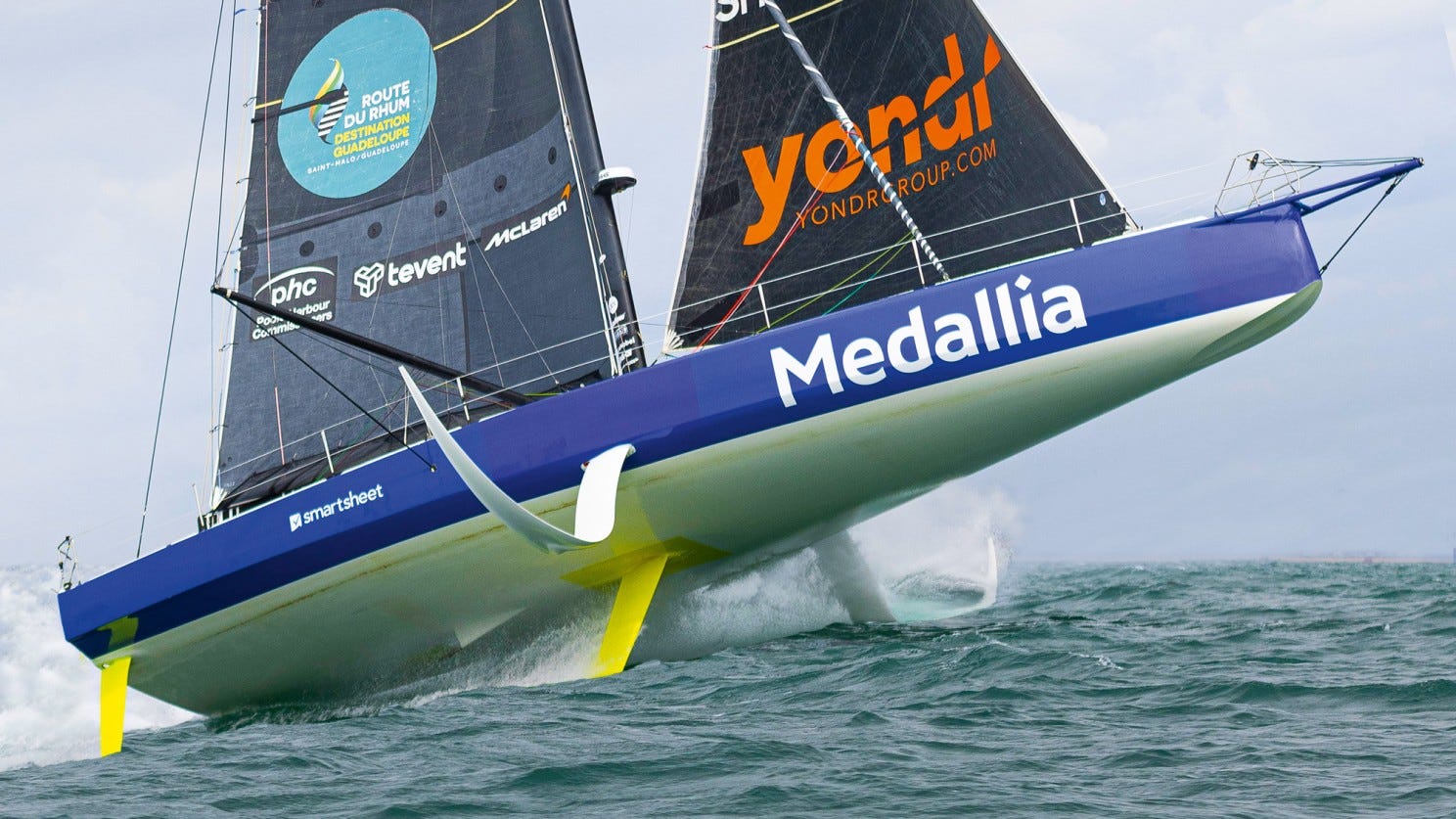
5.3 Rudder as a Lifting Foil
A rudder is not just steering—it contributes to side force balance:
Balances the keel’s lift
Controls yaw moment
Influences drag dramatically
Poor sailing:
Dragging the rudder = brake on permanently
Elite sailing:
Minimal rudder angle = maximum efficiency
6. Interaction: Keel + Rudder + Hull
This is where naval architecture becomes decisive.
Centre of Gravity (COG)
Determined by keel weight and placement
Drives righting moment
Centre of Effort (COE)
From sails
Moves with trim and sail plan
Balance:
If COE too far aft → heavy helm → drag
If too far forward → unstable steering
The system:
Keel generates lift → rudder balances it → hull connects flow
7. Why So Many Shapes Exist (Especially Under IRC)
IRC does not reward absolute speed—it rewards measured efficiency within constraints.
Designers juggle:
Draft limits
Stability vs rating
Wetted surface
Righting moment
Construction cost
Result: No “perfect keel”—only optimised compromises
8. Limitations of Foils in the Real World
Even perfect design fails if conditions change:
Waves distort flow → dynamic stall
Heel alters effective foil geometry
Speed changes Reynolds number → different behaviour
Fouling destroys performance instantly
9. Foil Care: Where Races Are Quietly Won
9.1 Surface Finish
Mirror smooth = lower skin friction
Any roughness = drag increase
Even light slime = measurable performance loss
9.2 Leading & Trailing Edges
Leading edge must be fair and true
Trailing edge must be sharp but not fragile
Blunt trailing edge = turbulence Over-sharp = damage risk
9.3 Alignment
Rudders must be perfectly aligned
Keel symmetry must be exact
A few millimetres error = constant drag + helm load
Thanks for reading Stuart Greenfield - FirstBeat - Offshore racing intelligence! This post is public so feel free to share it.
9.4 Pre-Race Checklist (Non-Negotiable)
Clean to racing standard (not “looks fine”)
Check for nicks, chips, delamination
Verify rudder bearings and play
Confirm autopilot calibration (critical offshore)
10. What Elite Helmsmen Actually Feel
Top sailors don’t “guess”—they interpret:
Pressure on helm = foil loading
Acceleration = attached flow
Sudden lightness = stall onset
Noise/vibration = separation
They steer to:
Maintain laminar flow
Minimise rudder angle
Keep keel at optimal AoA
11. The Brutal Truth
Most IRC boats are not slow because of:
Sails
Routing
Crew
They are slow because:
The foils are not being sailed correctly.
12. Final Principle
Your keel and rudders are the only parts of the boat that turn physics into performance. Everything else is input.
Master them—and everything else starts to work.
Ignore them—and nothing else will save you.
Stuart Greenfield
FirstBeat — Offshore Racing Intelligence
From first beat to first place.
Offshore racing is never just about the boat, the forecast, or the routing software.
It is about decisions made under pressure, in changing conditions, by tired people trying to keep the boat moving fast and safely in the right direction.
That is where races are won and lost.
At FirstBeat, my aim is simple: to help owners, skippers and crews race offshore with more clarity, more confidence, and better preparation whether that is a RORC Channel race, a Fastnet campaign, or your first serious step into offshore racing.
If this article helped you think a little more clearly about the next race, please consider subscribing.
Free subscribers receive regular offshore racing notes, tactical insights, safety thinking, and race-preparation ideas.
Paid subscribers help support the work and receive deeper analysis, including more detailed race briefings, tactical notes, routing thoughts, and practical offshore performance intelligence.
Thanks for reading.
